
Brand vs. Reputation: What’s the Difference?
Brand and reputation are connected, but they’re not the same. Learn the difference between what your business builds, what people believe, and how the two work together to shape trust, recognition and growth.
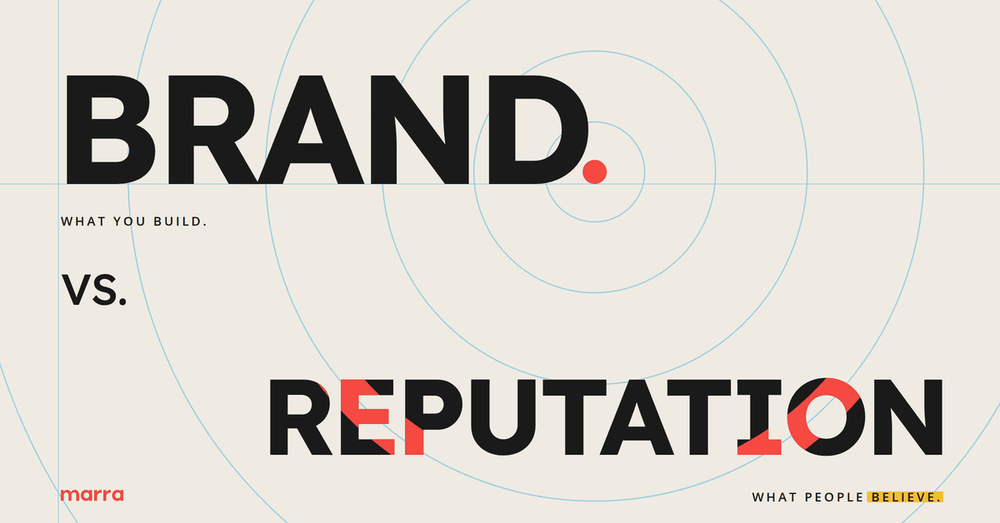
Brand vs. Reputation: What’s the Difference?
You build your brand.
People build your reputation.
The two are connected, but they are not the same thing.
Your brand is shaped by the decisions you make: your positioning, identity, messaging, experience and the way you show up.
Your reputation is shaped by what happens next.
What people experience. What they remember. What they say about you. And whether what you promised matches what you delivered.
Understanding the difference between brand and reputation matters because a strong identity cannot compensate for a consistently poor experience.
And a great experience is harder to recognize, remember and grow without a strong brand around it.
You need both.
What Is a Brand?
A brand is the overall idea people associate with a business, product or service.
It is bigger than a logo.
A brand brings together your positioning, purpose, audience, personality, messaging, visual identity, tone of voice and experience.
Branding is the work you do to intentionally shape those elements into something people can understand, recognize and remember.
You decide what you want to stand for.
You define what makes you different.
You build an identity around it.
You communicate it.
And you create experiences that reinforce it.
But there is a point where your control ends.
That is where reputation enters.
What Is Brand Reputation?
Brand reputation is what people come to believe about your business based on what they see, hear and experience.
It develops through customer experiences, reviews, recommendations, products and services, social media conversations, search results, customer service and word of mouth.
You can influence your reputation.
You cannot simply declare it.
You can say your business provides exceptional service.
Your customers decide whether that is true.
You can position yourself as premium.
The experience has to support it.
You can say you care about quality.
Your product has to prove it.
The brand makes the promise.
The experience tests it.
The reputation remembers the result.
Brand vs. Reputation: The Simple Difference
The easiest way to understand brand vs. reputation is this:
Your brand is what you intentionally build.
Your reputation is what people come to believe about it.
| Brand | Reputation | |
|---|---|---|
| What is it? | What your business stands for and how it expresses itself | What people believe about your business |
| Who shapes it? | Primarily the business | Customers, employees, media and the wider public |
| How is it built? | Strategy, identity, messaging and experience | Experience, actions, reviews and word of mouth |
| How much can you control? | You have significant influence | You can influence it, but not completely control it |
| What strengthens it? | Clarity, distinction and consistency | Trust, delivery and repeated positive experiences |
Different roles.
But constantly influencing one another.
Brand Is What You Promise. Reputation Is What You Prove.
Imagine a hospitality brand.
The identity is beautiful.
The photography feels premium.
The website is polished.
The messaging promises exceptional attention to detail.
That creates an expectation.
Then the customer arrives.
The booking cannot be found. The service is poor. The experience does not match what was promised.
The branding may still look premium.
The reputation probably will not.
Now imagine the opposite.
The service is excellent. Customers love the business and recommend it constantly.
But the website looks unreliable. The identity changes everywhere. The messaging is unclear.
The reputation may be strong among people who already know the business.
But the brand is making it harder for new people to discover and understand that value.
This is why brand and reputation need to work together.
What Builds a Strong Brand?
At Marra, we think about a brand as a connected system.
Strategy
Before people can understand your brand, you need to understand it yourself.
Who are you?
Who are you for?
Where do you sit in the market?
What makes you different?
What do you want to be known for?
Brand strategy gives those answers direction.
Brand Identity
Identity gives that direction a recognizable form.
Your logo, typography, color, imagery, graphic language, motion and art direction should work together to create something people recognize as yours.
The goal is not simply to look good.
It is to become recognizable.
Messaging
What do you say?
What do you emphasize?
How do you explain what you offer?
How do you sound?
Clear messaging helps people understand the brand before they experience it.
Digital Experience
Your website and digital touchpoints are where branding becomes experience.
A business can describe itself as easy, modern and customer-focused.
But if its website is confusing and difficult to use, the experience is already contradicting the message.
Content
Content keeps the brand visible.
Every campaign, post, article and piece of communication is another opportunity to reinforce what the brand stands for.
Over time, consistency builds familiarity.
And familiarity builds recognition.
What Builds a Strong Reputation?
Reputation develops when people interact with those brand promises.
Customer Experience
Every interaction adds something.
The buying process.
Delivery.
Customer service.
The website.
The physical environment.
How problems are handled.
Together, those moments influence what customers eventually believe about the business.
Product and Service Quality
Strong branding can encourage someone to try you.
It cannot make them believe a poor product is good forever.
Long-term reputation needs something real underneath it.
Reviews and Word of Mouth
Reviews turn individual experiences into public signals.
Word of mouth takes them even further.
“Try them.”
“They're really good.”
“I wouldn't recommend them.”
Those conversations happen outside your marketing.
But they influence your brand every day.
Search and Social Media
Reputation is increasingly visible.
Someone can search your business and find reviews, social profiles, articles, images and customer conversations before ever speaking to you.
That makes your digital presence part of reputation building too.
What Happens When Brand and Reputation Don't Match?
This is where the difference becomes clearer.
Strong Brand. Weak Reputation.
The business looks excellent.
Its positioning is clear.
Its campaigns are strong.
People recognize it.
But the customer experience repeatedly disappoints.
Eventually, reputation catches up.
Branding may attract attention.
It cannot permanently hide reality.
Weak Brand. Strong Reputation.
The business delivers excellent work.
Customers love it.
Recommendations are strong.
But its identity is inconsistent, the website is unclear and its value is difficult to understand from the outside.
The opportunity here is different.
Build a brand that properly represents what customers already value.
Strong Brand. Strong Reputation.
The expectation and the experience reinforce each other.
What the business says matches what it delivers.
What customers experience gives them reasons to believe the positioning.
And what they tell other people reinforces the brand further.
This is where brand and reputation begin working together.
Brand Experience Connects the Two
There is a bridge between brand and reputation.
Experience.
Your brand establishes an expectation.
Your experience either confirms or contradicts it.
That experience contributes to your reputation.
Think about the journey:
Brand promise → Customer expectation → Experience → Perception → Reputation
This is why branding should not stop with an identity.
Your website matters.
Your packaging matters.
Your content matters.
Your customer journey matters.
Your communication matters.
They are all places where the brand becomes real.
Brand Management vs. Reputation Management
Brand management and reputation management also play different roles.
Brand management focuses on developing and maintaining your positioning, identity, messaging, content, guidelines and overall brand experience.
Reputation management focuses on understanding and responding to how the business is perceived through reviews, customer feedback, search results, online mentions and public conversations.
But the two should talk to each other.
What customers say about the business can reveal where the brand is working and where the experience is falling short.
How to Build Your Brand and Reputation Together
Start with what you want to be known for.
Define your positioning and make sure the promise is something the business can genuinely deliver.
Then connect the touchpoints.
Your social media should not feel like one company while your website feels like another. Your sales experience should not contradict your marketing. Your product should deliver the quality your identity suggests.
And listen.
What do customers repeatedly value?
What do they misunderstand?
Why do they recommend you?
Where does the experience fall short?
One complaint may be an exception.
Repeated complaints are a pattern.
Do not solve an experience problem with better marketing.
Fix the experience.
When customers consistently value the business, make that reputation visible through reviews, testimonials, case studies and real results.
Brand creates the expectation.
Experience delivers it.
Reputation carries it forward.
Brand vs. Reputation in the Digital Age
The gap between what businesses say and what customers experience is more visible than ever.
Someone can see an advertisement, search the company on Google, read reviews, visit Instagram, watch customer content and compare alternatives before ever reaching the website.
That changes the role of branding.
You cannot simply create an image and expect people to accept it.
The brand has to hold up when people investigate it.
That makes consistency between what you say and what people experience increasingly important.
Brand and Reputation for Saudi Businesses
For businesses in Saudi Arabia, discovery can move quickly between personal recommendations and digital channels.
Someone hears about a business.
Checks Instagram.
Searches Google.
Reads reviews.
Visits the website.
Asks someone who has tried it.
Then decides.
That means branding, search visibility, social media, customer experience and reputation cannot be treated as completely separate conversations.
This becomes even more important when Saudi brands expand into new cities, GCC markets or international audiences.
Existing customers may already know your reputation.
New audiences do not.
Your brand and digital presence need to communicate the value your existing customers already understand.
Frequently Asked Questions About Brand vs. Reputation
What is the difference between brand and reputation?
A brand is what a business intentionally builds through its strategy, identity, messaging and experiences. Reputation is what people come to believe about that business based on their experiences, reviews, recommendations and what they observe.
Is brand reputation the same as brand image?
Not exactly. Brand image refers to the associations and perception surrounding a brand, while reputation develops over time through the business's actions, customer experiences and public feedback.
Can you have a strong brand and a bad reputation?
Yes. A business may have strong recognition, identity and marketing while developing a poor reputation because its product, service or customer experience does not match the promise.
Can you have a good reputation without a strong brand?
Yes. Some businesses build excellent reputations through customer experience and word of mouth while having weak positioning or inconsistent branding. Strengthening the brand can help turn that existing reputation into wider recognition.
What is brand reputation management?
Brand reputation management is the ongoing process of monitoring, building and protecting how a business is perceived through customer experience, reviews, digital presence, communication and public feedback.
How does branding affect reputation?
Branding creates expectations around a business. Customer experiences then confirm or contradict those expectations. Consistently delivering what the brand promises can help build a stronger reputation over time.
Build the Brand. Earn the Reputation.
Your brand and your reputation are not competing ideas.
One creates the expectation.
The other reflects what happened after.
The strongest businesses connect the two.
They know what they stand for.
They communicate it clearly.
They create an experience around it.
And then they deliver.
At Marra, we connect strategy, brand identity, digital experience, content, growth and reputation across every touchpoint.
Because a brand should not only look like what you say you are.
It should feel like it too.
Ready to build the two together?
Start with Marra.